



Cervical osteochondrosis is a dystrophic dysfunction of the intervertebral discs of the cervical spine.The disease manifests itself in the form of severe pain in the head, neck and upper back.
The danger of osteochondrosis lies not only in the deterioration of the quality of life, but also in the risk of disability.
Features of the course of SCH in women
Symptoms of the development of spinal diseases in men and women are practically the same, but there are still some differences.In women, cervical osteochondrosis is diagnosed more often.This is explained by anatomical features.
Unlike women, men have well-developed shoulder girdle muscles, which support the cervical spine.
Reference.The condition of the spine is negatively affected by pregnancy and the subsequent period of childcare.
The cause of the development of female cervical osteochondrosis may be hormonal changes that occur during the aging process.After menopause, a slowdown in metabolic and nutritional processes in cartilaginous tissue is observed.
Reasons and factors
There are many reasons for the development of SCH in women.The most common are menopausal changes in the body.During this period, the amount of progesterone in the female body decreases significantly.As a result of these processes, the support of the spine becomes weaker.Other reasons include the following:
- problems with blood circulation;
- sedentary lifestyle;
- presence of excess weight;
- great physical activity;
- weak immunity;
- heredity;
- spinal injuries;
- problems with hormonal levels;
- hypothermia.
The list of provoking factors is quite extensive.Women need to carefully monitor their health and support their immune system.
Symptoms
How does the disease manifest itself at an early stage?
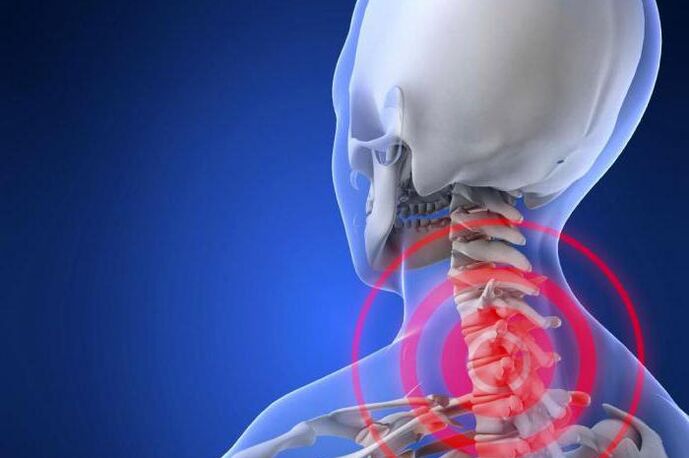
It is important to promptly recognize signs of developing disease.Early symptoms include:
- feeling of stiffness in the neck;
- sudden onset of snoring during sleep;
- frequent headaches;
- discomfort in the fingers and shoulder;
- periodic numbness of the limbs;
- sharp pains that radiate to the neck.
Local signs
With cervical osteochondrosis, a number of local symptoms occur.These include the following manifestations:
- stenosis;
- reflex-irritative syndrome;
- radicular syndrome;
- cardiac syndrome.
Stenosis involves poor circulation in the affected area.The patient feels stiffness and pain.There may be numbness and tingling in the extremities.
Reflex-irritative syndrome can manifest itself in the form of a burning and tingling sensation.The pain may radiate to the shoulder joint or chest.
Radicular syndrome causes headaches.Sometimes there are problems with speech.
Cardiac syndrome in its nature resembles an attack of angina pectoris.In some cases, blood pressure increases and arrhythmia appears.
Signs of an acute condition
During the acute phase, deformations of the vertebrae are observed, which compress the vertebral artery.Due to the fact that blood does not flow to the brain, the following abnormalities are observed:
- speech disorder;
- dizziness;
- tinnitus;
- double vision.
The pain can radiate to the stomach, heart and lungs.When the nerve endings in the cervical spine are compressed, pain occurs from the neck to the shoulder blades.
Stages of the disease and their distinctive features
SHOC occurs in several stages.Each of them has its own distinct symptoms.In total, there are 4 main stages in the development of osteochondrosis:
- In the initial stage, the disease resembles dehydration of the nucleus pulposus.The patient develops fissures in the fibrous ring.
- The second stage involves sagging muscles and ligaments.As a result, a motor imbalance of the vertebrae occurs.This stage of the disease is characterized by displacement of the vertebrae.
- The third stage of development is characterized by more pronounced symptoms.Patients develop protrusions of intervertebral discs and osteoarthritis.
- The fourth stage is the final.A distinctive feature is osteophytes.Bone growths form on the surface of the vertebrae.Excessive growth of fibrous tissue is observed.
In the absence of timely diagnosis and treatment, the disease can lead to disability.
Diagnosis
When the first symptoms of the disease appear, you should consult a doctor to undergo an examination and prescribe appropriate treatment.In addition to collecting anamnesis, the doctor prescribes several diagnostic tests.
Instrumental examination methods
Instrumental diagnostic methods will help to make the most accurate diagnosis and determine the patient's condition.The following procedures are most often prescribed:

- X-ray;
- myelographic study;
- Ultrasound;
- MRI.
Plain x-ray is necessary to obtain an image of the entire spine or the affected part.With its help, the doctor will be able to establish the localization of the pathology.With osteochondrosis, an image of the spine can show the presence of bone growths and narrowing of the intervertebral disc.
A more complex type of diagnosis is a myelographic study.It consists of injecting contrast liquid into the spinal canal.
Important.This procedure can be dangerous as it can cause an allergic reaction or damage the spinal cord.
This study allows us to study the internal structure of the spinal canal.
Computed tomography and magnetic resonance imaging are among the most effective diagnostic methods.Based on the results, it is possible to distinguish osteochondrosis from other diseases with similar symptoms.
Treatment
Drug therapy
Treatment of cervical osteochondrosis should be comprehensive.The important part is drug therapy.In most cases, the following groups of medications are prescribed:
- analgesics;
- anti-inflammatory;
- chondroprotectors;
- muscle relaxants;
- vitamins.
Painkillers include nonsteroidal medications that help relieve pain.Most of these medications have an irritating effect on the lining of the digestive tract.
To alleviate the inflammatory process, hormonal medications are prescribed.Effective steroid medications include glucocorticosteroid-based ointments and tablets.
Chondroprotectors contain substances that replace the components of cartilage tissue - hyaluronic acid and chondroitin.To achieve a lasting effect when taking these medications, a fairly long therapeutic course is prescribed.
To relax muscle tone, it is recommended to take muscle relaxants.They are auxiliary medications for pain relief.The muscle relaxant is administered parenterally and only under the supervision of a specialist.For the treatment of osteochondrosis, agents based on benzimidazole and glycerin are used.They have a large number of contraindications.
To maintain the functioning of the immune system, vitamin complexes are prescribed.They have a positive effect on the peripheral nervous system.The composition must contain fat-soluble vitamins E, D, C, E and B vitamins.
External ointments are quite effective in treating osteochondrosis.They help relieve inflammation, warm up and relieve pain.Before using them, you should consult a specialist.
Are the medications effective?
Drug treatment for cervical osteochondrosis is quite effective.It allows you to eliminate the inflammatory process and relieve pain.To obtain the maximum therapeutic effect, medications must be combined with therapeutic exercises and massage.
Gymnastics
Before starting gymnastics, you should consult a specialist.During exacerbations, it is best to avoid physical activity.It is important that gymnastics does not cause exacerbation of pain.
Reference.All exercises are as simple as possible and involve head movement and isometric muscle tension.
This type of gymnastics can be performed both at home and at work.The starting position for almost all exercises is sitting.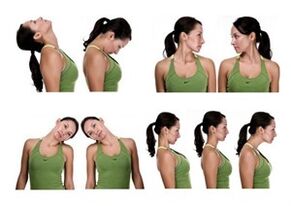 An approximate set of exercises:
- Turn your head all the way to the right and then to the left.It is important not to make sudden movements.When turning, the tension must be maintained for 5 seconds.
- Tilts from head to shoulder.You should try to touch your shoulder with your ear, but you shouldn't lift your arm.The exercise should be done with painless amplitude.
- Circular movements of the head in a counterclockwise and clockwise direction.Rotations should be performed as slowly as possible.
This light exercise will help stretch your muscles.To bring good results, this gymnastics must be performed regularly.In this case, the increase in load should be gradual and painless.
Massage
Massage should only be performed by a professional.It is necessary to work the cervical region, part of the back and collar area.The following techniques can be used:
- stroking;
- squeezing;
- crushing;
- kneading.
The massage should not cause pain.A procedure carried out by non-professionals can only make the situation worse.
Folk remedies for home therapy
Traditional therapy methods can be used as additional methods.These can be compresses made from fresh horseradish leaves.They are applied to the cervical region and must be kept overnight.
A compress made from grated potatoes and honey is quite effective.This procedure should be carried out no more than once a week.Folk remedies help alleviate the patient's condition, but do not cure the disease.
Is it possible to completely cure SCH?
Cervical osteochondrosis cannot be completely cured.Therapy aims to improve the patient's condition and stop the progression of the disease.Periodic relapses are possible, so the patient must carefully monitor her condition.The sooner treatment is started, the better the result.
Prevention
Proper nutrition

Proper nutrition plays an important role in preventing cervical osteochondrosis.The diet should contain products that contain substances synthesized for cartilaginous tissue.It can be jellied meat, jelly or gelatin.
Important.There must be a sufficient amount of protein in the body.
It can be found in fish, eggplant and meat.It is important to monitor your water balance.Lack of water can lead to dehydration of the intervertebral discs.
It is necessary to introduce foods rich in vitamins and minerals into the diet.For example, fresh fruits, vegetables, seafood, pork and beef.
Active lifestyle
An active lifestyle will minimize the risk of developing the disease.Women are not recommended to lift weights greater than 10 kg.If you have back problems, it is recommended to wear a special corset.
To ensure quality and long-lasting sleep, it is best to purchase a special orthopedic mattress and pillow.Experts recommend swimming, but it's best to avoid running and jumping.During a period of exacerbation, you should not go to the bathhouse.
Cervical osteochondrosis is most often diagnosed in women.It is important to notice the first signs of deviation in time and begin treatment.The sooner therapy is started, the more effective it will be.