


Many people today struggle with a lack of physical activity.Monotonous office work, long periods of watching TV at home and poor nutrition are the main causes of many diseases.One of them can be called osteochondrosis of the cervical spine, one of the most mobile segments of the human spine.It endures a lot of stress every day, as its main function is to hold the head.
This disease brings significant discomfort to patients' lives and is equally common among women and men.The disease is considered progressive, associated with degenerative-dystrophic disorders of the intervertebral discs and therefore requires timely seeking qualified medical help.
Reasons for the development of pathology
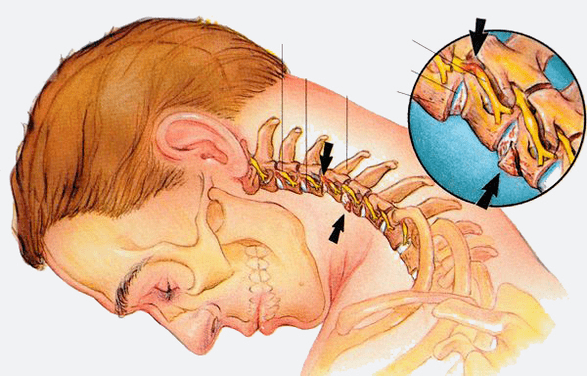
Osteochondrosis can affect all departments, but due to the increased activity of the cervical region, it often develops there.
The disease is conventionally divided into 4 main phases:
- The first is associated with initial disorders of the vertebral discs, which are accompanied by unstable signs and symptoms are mild.
- The second is when the spaces between the vertebrae are reduced and destruction of the fibrous ring begins, possibly compressing the nerve roots and, as a result, causing pain.
- Thirdly, when the destruction of the ring is already in the final stage, intervertebral hernias can form and there are often signs of deformation of the spinal column.
- The fourth is the most serious phase, when bone growths occur and any movement becomes very painful and almost impossible, which, if not treated, can cause disability.
Currently, there is a significant detection of osteochondrosis in young people, including in the cervical spine.If previously this disease was considered age-related and occurred in patients over 40 years old, today young people between the ages of 18 and 30 also often face this problem.
The causes of the disease are as follows:

- problems with being overweight;
- poor posture and curvature of the spine;
- delay in metabolic processes in the body;
- various spinal injuries;
- heavy physical work and systematic lifting of significant weights;
- practicing certain sports, disrupting the training process;
- poor general physical fitness, in particular weakness of the back muscle corset;
- systematic hypothermia;
- past infectious diseases;
- sedentary lifestyle, lack of physical activity.
The reasons for limited mobility of the cervical spine are also typical.These are muscle spasms, deterioration of blood supply, compression of nerve endings, narrowing of the openings between the vertebrae and the development of degenerative processes in the vertebrae and intervertebral discs.
Symptoms of the disease
The characteristic symptoms and signs of cervical osteochondrosis are predominantly a consequence of impaired blood supply to the head and brain.This is due to the fact that the cervical region is saturated with blood vessels and it is thanks to them that the human brain is nourished.
The characteristic symptoms of cervical spine pathology are the following:
- headache which, depending on the degree of the disease, can be quite intense and systematic;
- dizziness in cervical osteochondrosis is often accompanied by loss of consciousness;
- the presence of characteristic ringing in the ears, often hearing loss;
- impaired coordination of movements, gait;
- blurred vision;
- increased skin temperature and sometimes a general increase in body temperature;
- voice changes, such as hoarseness or hoarseness;
- unsatisfactory condition of teeth;
- feeling of numbness in the fingers, cold and a feeling of weakness in the hands;
- pain in the neck, throat, painful sensations when in contact with the scalp, sometimes even toothache;
- pain that spreads to the arms, shoulders and intensifies with several turns or movements of the neck and head;
- nausea or even vomiting, which may accompany severe pain.
Headache, difficulty moving and other symptoms can be present both in combination and separately, and also have varying degrees of intensity.As a rule, this directly depends on which specific object is affected by the disease.According to this criterion, the disease is classified into the so-called radicular syndromes, vertebral artery syndrome, spinal cord compression, cardinal syndrome, reflex syndromes and others.
Treatment of osteochondrosis of the cervical spine
If there is no treatment for cervical osteochondrosis, patients may experience symptoms typical of an untreated disease (headache, memory loss, fever, dizziness, etc.) and subsequently face a number of rather unpleasant consequences.For example, this may be a violation of cerebral circulation, which occurs due to a deterioration in blood flow through the vessels.

To avoid this, a patient who notices the first signs of pathology needs to seek qualified help.
To provide first aid to the patient, you can use analgesics and anti-inflammatory drugs (tablets, ointments, injections).You can also use distraction medications at home before visiting a doctor, for example, warming ointments containing snake venom or bee venom.If swelling occurs, you should use diuretics or relieve swelling with folk remedies, for example, herbal decoctions.Medical consultation should be mandatory, regardless of the relief the patient receives during self-medication.
Prolonged cervical osteochondrosis cannot be cured.
Osteochondrosis of the cervical spine is usually diagnosed based on the patient's complaints.To confirm the diagnosis, methods such as X-ray, computed tomography or magnetic resonance imaging are used.
After confirming the diagnosis, the specialist prescribes treatment depending on the stage of the disease and the individual characteristics of the patient's health status in general.It is important to note that it is possible to get rid of the problem with the help of medications only in the initial stages.When treating a pathology at the very beginning of its development, treatment with folk remedies can be quite effective.
In the more advanced stages of cervical osteochondrosis, its treatment is limited to reducing discomfort, pain and physical suffering in patients.With a competent and comprehensive approach, it is possible to eliminate the main symptoms of the disease and prevent possible exacerbations, as well as prevent the development of pathological processes in the spine.
Complex treatment of the disease involves the use of traditional medicine and non-traditional methods.Also, during the remission phase, additional treatment with folk remedies is acceptable.
Among the most common methods of treating the disease are the following:

- vacuum therapy;
- medication treatment;
- acupuncture;
- laser therapy;
- electrical stimulation;
- dry traction;
- magnet treatment;
- therapeutic exercises;
- therapeutic massage course, etc.
To relieve pain, as a rule, it is enough for the patient to undergo 1 to 3 treatment sessions.To consolidate positive therapeutic success, approximately 10 to 15 treatment sessions may be necessary.After withdrawal from the acute phase, they resort to therapeutic exercises and massages.This will help restore blood circulation and strengthen your muscles.